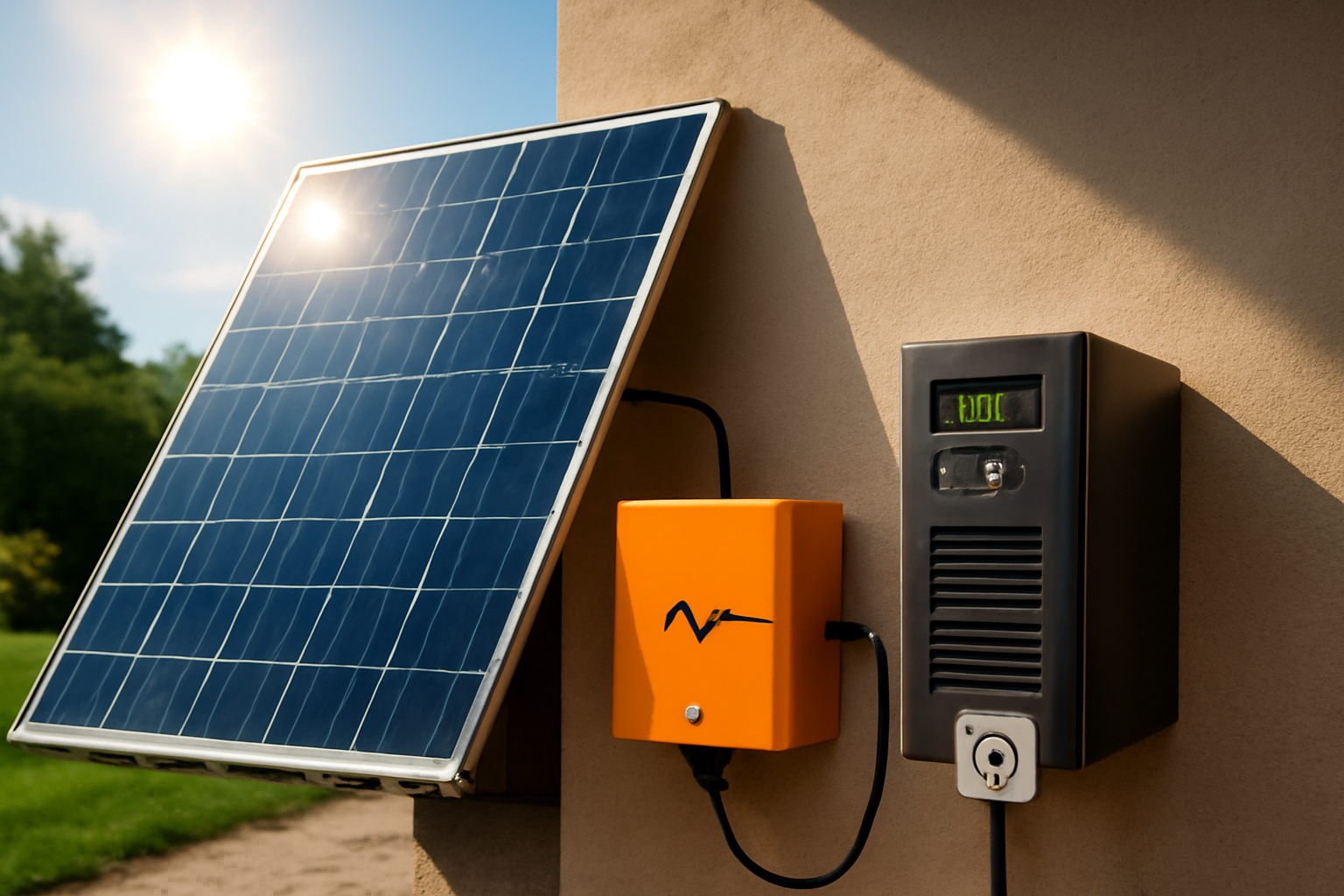

The interest in solar power in Pakistan has grown unexpectedly in recent years. Rising electricity bills, common load-shedding, and an unreliable energy grid have pushed households and businesses to search for long-term solutions. Among all solar components, the solar inverter plays a key position.
Think of it in this manner: if solar panels are the heart of the solar panel system, then the inverter is the brain. Without an inverter, the power your panels generate can’t energize your own home.
This makes choosing the right inverter extraordinarily critical, now not just for overall performance, but also for long-term savings. But the large query most people ask is, “How much does a solar inverter cost in Pakistan?”
Let’s dive deep into sorts, capabilities, and special pricing that will help you make a knowledgeable choice.
Table of Contents
Why Solar Inverters Are So Important
While solar panels get most of the attention, inverters quietly handle the real work. Here’s why they matter:
- Conversion of Power: Panels produce DC electricity, but your fans, lights, ACs, and refrigerators all need AC. That’s where inverters step in.
- Performance Maximization: High-grade inverters make sure that you get the most viable output from your panels.
- System Monitoring: New inverters can connect with apps, permitting you to monitor production and usage in real time.
- Safety & Protection: Inverters regulate voltage and protect appliances from surges.
Without an inverter, your solar investment simply won’t work as intended.
Types of Solar Inverters in Pakistan
Choosing the right type of inverter depends on your energy needs, location, and budget. Here’s a breakdown:
1. String Inverters
- All panels are connected in a series (“string”) and feed into one inverter.
- Best for homes without shading issues.
- Pros: Affordable, simple setup.
- Cons: One panel’s underperformance affects all others.
- Price: PKR 80,000 – 250,000.
2. Hybrid Inverters
- Can hook up with both the national grid and batteries.
- Ideal for cities in which load-shedding is usual.
- Pros: Flexibility solar, grid, and batteries are multi-useful.
- Cons: Higher advance price.
- Price: PKR one hundred fifty thousand – 500,000.
3. Off-Grid Inverters
- Completely impartial of the grid.
- Best for rural regions where electricity is unreliable.
- Pros: Total independence.
- Cons: Requires large batteries, which adds value.
- Price: PKR 100,000–400,000.
4. Micro Inverters
- Each panel has its very own small inverter.
- Great for areas with shading or in which panels face different directions.
- Pros: Maximum efficiency, smooth-to-extend device.
- Cons: More high-priced typically.
- Price: PKR 30,000–70,000 in keeping with the panel.
Average Solar Inverter Price Ranges in Pakistan
To give you a clear picture, here’s a general guide:
| Inverter Capacity | Price Range (PKR) | Suitable For |
| 3kW – 5kW | 80,000 – 200,000 | Small homes or shops |
| 6kW – 10kW | 150,000 – 400,000 | Medium homes or offices |
| 10kW – 20kW | 350,000 – 900,000 | Large homes, industries |
| 20kW and above | 1,000,000+ | Large industries or commercial |
Tip: Prices fluctuate with the dollar rate, import taxes, and market demand.
Popular Solar Inverter Brands in Pakistan
When buying it, you’ll find several brands. Here are the most common ones in the Pakistani market:
- Huawei—Advanced technology, exceptional performance, slightly top-rate pricing.
- Sungrow—Durable and cost-effective, broadly used in residential setups.
- Growatt—Reliable with an appropriate after-sales provider.
- GoodWe—Popular for hybrid systems with long warranty options.
- Inverex—an affordable, locally available, strong service network.
- Tesla & Fronius—premium brands, higher costs, but unmatched quality.
Each brand has entry-level and premium models, so prices vary significantly.
Factors That Affect Solar Inverter Prices
1. System Size
A 3kW inverter for a small house will obviously cost less than a 20kW inverter for a factory.
2. Battery Requirement
Hybrid and off-grid inverters with battery support cost more than simple grid-tied models.
3. Technology Level
Smart features like Wi-Fi monitoring, mobile apps, and remote fault detection add to the cost.
4. Warranty & Support
Brands with longer warranties (5–10 years) are priced higher but provide peace of mind.
5. Import Dependence
Almost all proper inverters are imported, so the exchange charge has a big effect on prices.
How to Choose the Right Inverter for Your Needs
When shopping for an inverter, keep these factors in mind:
- Calculate Your Load: How many appliances do you want to run? (Fans, lights, ACs, fridges, and so forth.)
- Future Expansion: If you intend to add extra panels later, choose an inverter with greater ability.
- Budget vs. Performance: Don’t cross for the cheapest option—making an investment in a reliable brand saves cash in the long run.
- After-Sales Service: Always take a look at if the dealer offers installation, assurance claims, and maintenance.
Example Price Scenarios
To make matters clearer, let’s have a look at some real international examples:
- Small Home (3kW–5kW system): A family of four with simple home equipment may spend PKR 100,000–180,000 on an inverter.
- Medium House (6kW–10kW system): A home with a couple of ACs may need an inverter costing PKR two hundred thousand – 400,000.
- Large Villa/Office (10 kW–20 kW): A larger setup will in all likelihood require an inverter within the variety of PKR four hundred thousand–900,000.
- Industrial Setup (20kW ): Prices can without difficulty pass PKR 1 million, depending on the logo and requirements.
Solar Inverter Prices in 2025 – Market Trends
- Increasing Demand: As electricity tariffs rise, more people are going towards solar, mainly to better demand for.
- Dollar Dependency: Prices continue to be sensitive to currency fluctuations.
- Hybrid Systems on the Rise: More clients decide upon hybrid inverters due to load-shedding.
- Shift Toward Smart Inverters: Brands that specialize in cellular apps and monitoring equipment.
Why Invest in a Good Inverter?
- Higher Efficiency: Get maximum energy out of your solar panels.
- Reduced Maintenance: Premium inverters last longer and want fewer repairs.
- Better ROI: Though expensive upfront, true inverters help get better investment quicker through reliable savings.
- Peace of Mind: A strong warranty and after-sales support make sure stress free ownership.
Conclusion
Solar power is not a luxury in Pakistan, it’s becoming a necessity. While panels are the most visible part of the system, your preference of inverter will decide how well your funding plays.
In Pakistan, solar inverter costs begin from around PKR 80,000 for small houses and might properly move above PKR 1 million for huge-scale projects. The proper need depends on your budget, energy needs, and future expansion plans.
At Dawam Solar, our goal is that we will help you select the most cost-effective and dependable inverter for your needs—whether you’re powering a small home or a large business. By deciding on the right system today, you stabilize your future for coming years.
FAQs – Solar Inverter Prices in Pakistan
1. What is the average price of a solar inverter in Pakistan?
Between PKR 80,000 and PKR 500,000 for maximum homes, depending on size and brand.
2. Which type of inverter quality is best in Pakistan?
Hybrid inverters are the most sensible, in particular for areas with frequent load-shedding.
3. Which brands are most reliable?
Huawei, Growatt, GoodWe, Inverex, and Sungrow are popular and reliable in Pakistan.
4. How long do solar inverters last?
Usually 8–12 years with proper care, but premium models can last longer.
5. Do inverter prices change often?
Yes, they depend on the dollar rate, import policies, and local demand.
6. Can I use an inverter without batteries?
Yes, grid-tied inverters don’t need batteries. But for backup during load-shedding, a hybrid or off-grid inverter with batteries is required.
7. What’s the cheapest inverter option in Pakistan?
Entry-level string inverters start at around PKR 80,000.
8. Is it worth buying an expensive inverter?
Yes, because high-quality inverters are more efficient, last longer, and save you more money over time.